Eva Hopkins (288)
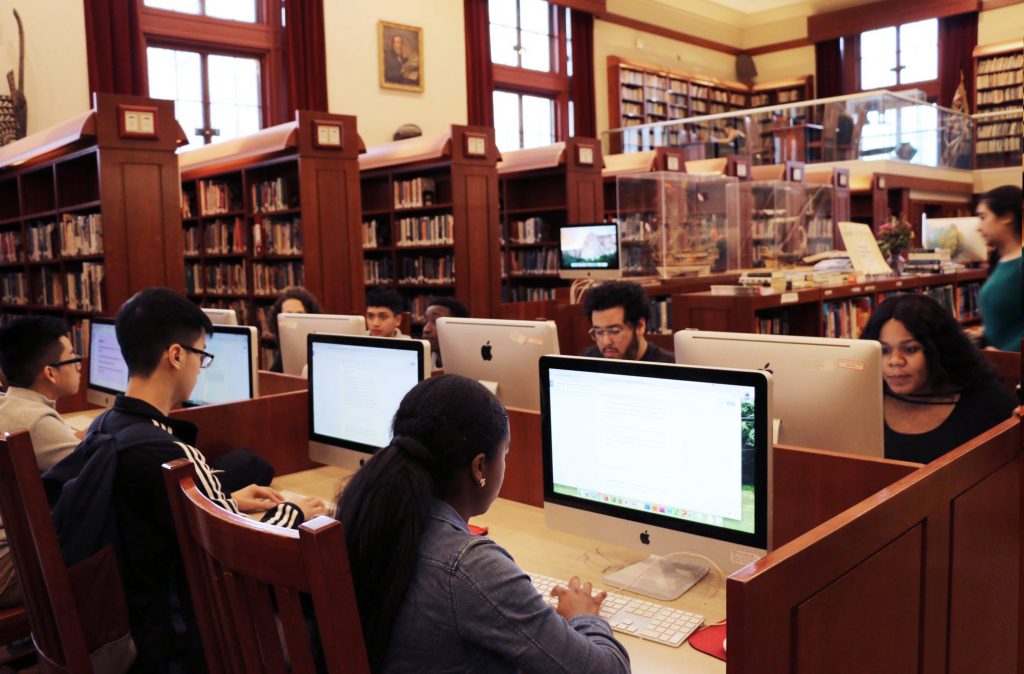
In 1838, Central High School hosted its first class with sixty-three students, and in the almost two hundred years since then, the school has continued to grow. We’re in our fourth school building, and the class sizes have grown tenfold. This year Central made another transition, letting in over seven hundred freshmen, compared to a usual class size of around six hundred. Adding an extra hundred students to an already very large school has caused more school traffic, making lines longer for new students and returning students alike. People arrive at the building earlier only to get let out of the line later.
“I hate it,” says Amelie Frost (288). “The hallways are too crowded.”
She said that she can’t get to her classes on time because of all the people. Knowing that passing periods are already crowded, and that more students would only make it worse, it doesn’t make sense that anyone would add more. So why did this happen?
“I don’t know the exact reason,” says Mr. Myrick, the 9th grade AP, “but I think because high schools are closing, the district might be funneling students into the schools that are not closing.”
The School District of Philadelphia is currently in the process of closing seventeen schools as part of a ten-year plan to get every school in better condition. According to the district website, “currently enrolled students [at schools that are closing] will be reassigned to other nearby schools.” Of the seventeen schools closing, two are in Network 15, Central’s network. It would make sense for the district to be phasing more students into other schools.
So what can Central students expect going forward? Long lines to get in and crowded hallways during passing periods?
It’s no secret that there are a lot of students at Central, and if the class of 289 is any indication, our school’s footprint is only going to grow. As everyone adjusts, teachers might need to be more lenient, or students might need to wake up earlier. Adding more students and expecting things to work themselves out may not be the best solution, but for that we’ll have to wait and see. But there are social issues that come with more students as well.
“When there are more students, it’s easier for kids to fall in the cracks,” says Mr. Myrick. “It’s easier for kids to hide behind one another.”
As more students join the Central community, we should all take accountability for making sure everyone is doing okay. Because whether we have sixty-three students or well over two thousand, our school has managed to foster a supportive community, and now, it’s our job to keep it that way.