Michelline Kho (288)
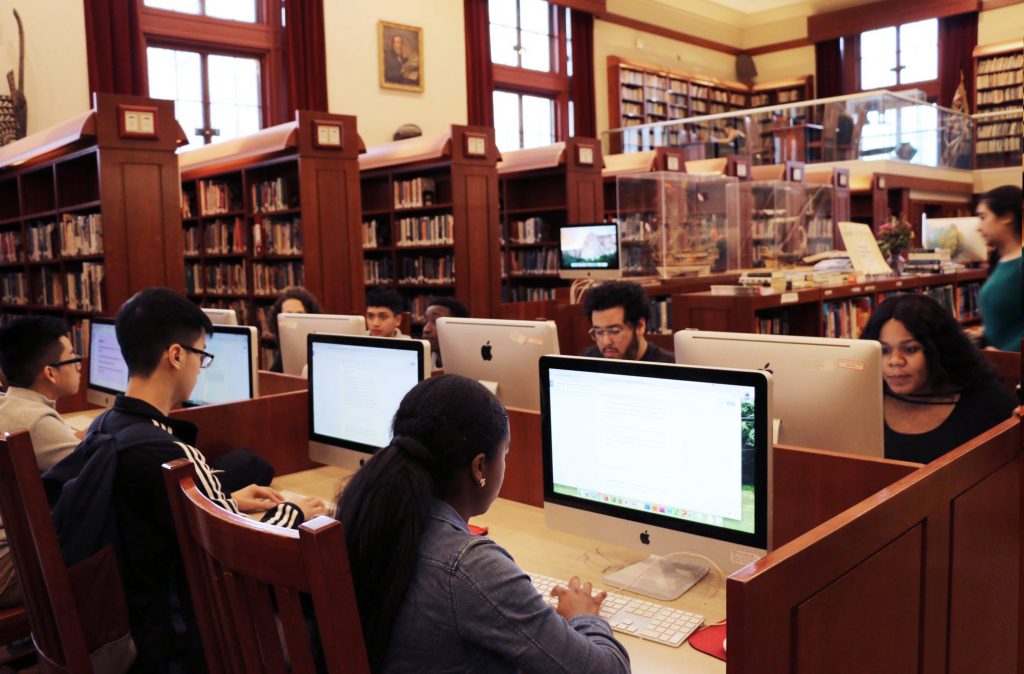
As this new era of technology arises in our world, the education system adapts to its concepts. Artificial Intelligence has slowly incorporated itself into our school environment with or without our concern. Students and teachers use AI, although they may use it for different purposes. I asked teachers about their use of AI and what exactly they use it for.
Mr. Sherwood, a social studies teacher at Central, stated that he “doesn’t use it at all.” He understands why students and other teachers may have used it, but he firmly believes he learned better without it. A scenario he mentioned was grading and how grading “is horrible. I hate grading, but I do a lot of it because it makes me a good teacher. If I grade a student’s essay and it takes three weeks to grade, that process is super important.” He then added later on how he utilized the same type of questions each year and used the results from each year to improve his teaching, style, and content. Mr. Sherwood also brought up the effects AI can have on students, society overall, and the environment. He stated, “naturally, students can feel drawn and heavily tempted to use AI. If you had given me the chance as a high schooler to use a machine to do my work, I would have easily taken that offer.” he then further explained, “I think as humans we’re drawn to it, and that’s one of the things that makes us human. We need work, and we need a task. So for students, the temptation is to use it, which I get, but the problem with that is we skip the struggling and opportunity to learn.” He added as well that, “the big AI companies just want power and control, and they are getting closer and closer to that. It is also really bad for the environment.”
Mr Franchetti, a music teacher at Central, said that he uses AI to format things for one of his college classes that he’s currently taking. He doesn’t use it for school and says that his class “doesn’t really need it,” While also adding, “The only time I have ever implemented AI in class was to help structure the rubric for, like, guitar, for example, where I can just ask to condense it into like a spreadsheet. It saves a lot of time.” He also mentioned that he wasn’t really aware of how to use it at first, but now that it is everywhere, he’s starting to figure it out. He may use AI to help mark videos for time on tutorials or anything that may be a key detail to what he is teaching. He admits that he doesn’t have an answer to the exact line between ethical and unethical. When asked about the effects of AI, Mr. Franchetti and Mr. Sherwood shared the same opinion on how AI can be dangerous if students, or really anyone, relies on it. Mr. Franchetti believes that the problem is how people use AI, not the machine itself.
Students felt that the use of AI can be positive in certain situations and aspects. As Luca Bolender (288) said, “Teachers can use AI to create visual representations, like slideshows, but not grade anything.” He then later adds that, “If a teacher uses AI to grade, then it would demoralize me and make me feel like… If a robot is grading my work, not a human, then what’s the point of even doing it.” When asked about how he feels about the effects of AI, he mentioned it’s very worrisome how easy it is to cheat now, especially in English classes. Keonna (288) stated that students view teachers as a role model, so using AI in a classroom setting can lead to “a lack of creativity and originality and hard work amongst students. The use of AI has made us lose the art of dedication and authenticity.”
Thus, opinions over AI use are subjective and based on personal preference. Only time will if any fears over AI will bear fruit and the usage it might bring.