
Jay Fischer (287)
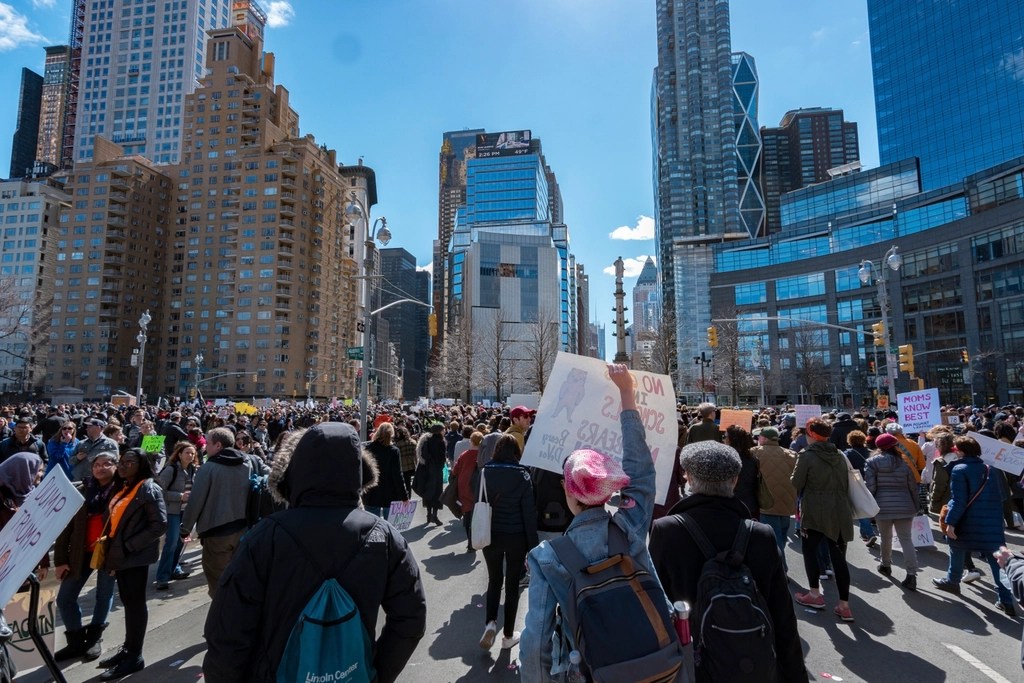
On April 5, 2025, three to five million Americans took to the streets in various cities around the nation to protest against our current presidential administration. In Philadelphia, a march was held following a path down Market Street from City Hall to Independence Hall. The protest advocated for a fair democratic society, civil rights, due process, and an end to mass deportations. Speakers included U.S. Rep. Brendon Boyle, state Sens. Vincent Hughes and Chris Rabb, and City Councilmember Rue Landau.
At the protest, signs with different slogans and jokes were everywhere, clearly spreading the message. Specifically, many signs called out a perceived government takeover by Elon Musk and his Department of Government Efficiency (DOGE). Their proposed plans include cutting Medicaid, Veterans’ assistance, social security programs, and USAID, freezing many grants from the federal government to important research programs, and cutting off millions in funding from elite universities such as Harvard and, more locally, the University of Pennsylvania. Some of these plans have already been carried out, while others have yet to come to fruition; however, these proposals have inspired uncertainty and anger in many Americans.
I interviewed a few students who attended these protests and asked them about their perspectives. Lucia Rodriguez-Mendez (285) and Stone Hamilton (285) attended that cloudy April day. When stating his main motivation for attending the protest, Stone stated, “I wanted to get my voice heard and have a nice emotional release for all the anger and stress that the political state has been putting me through.” Lucia said, “I felt like I was looking at the news and nothing was being done in response to everything that was happening.”
Concerns about the current administration have permeated almost all groups of people around the country, with teens having an even more uncertain future about things like higher education and healthcare access. “I’m worried about the state of the country,” Lucia bemoaned. Fears of an approaching authoritarian regime have been at the forefront of mind for many who attended these protests. Stone had specific concerns regarding his gender transition: “With how they’re targeting transgender youth and healthcare, when you plan something for your transition and then you can’t do it because now you’re worried if you’ll have consistent access to that healthcare.” This has been a major concern for transgender individuals due to the constantly shifting executive orders and courts blocking them throughout the first few months of the new administration.
While there are many reasons these students felt drawn to participate in this protest, the actual outcome of the demonstration proved less than satisfactory. “It doesn’t represent the anger and frustration that our citizens and people who live here are going through right now,” Stone lamented. Lucia was also disappointed with how the aftermath of the demonstrations played out, saying, “The way that it’s been reported has been diminishing.” Some feel the media coverage of this day of action was not representative of the scale of the actual protest, and that the movement’s next steps were not taken. Something interesting about the aftermath of the protest is that the website created for it has not been updated since it occurred. No plans for further action, no updates about how these demonstrations were carried out – just radio silence.
These demonstrations ignited a small fire around the country, but it was quickly extinguished because, after that day, there was much less large-scale backlash to the administration. However, the protest has proven that, if our citizens want to be the change they want to see, continuing to publicly oppose policies they don’t agree with and utilizing the First Amendment right to peaceful demonstration are valuable tools.



 Centralizer