
Emma Hwang 285
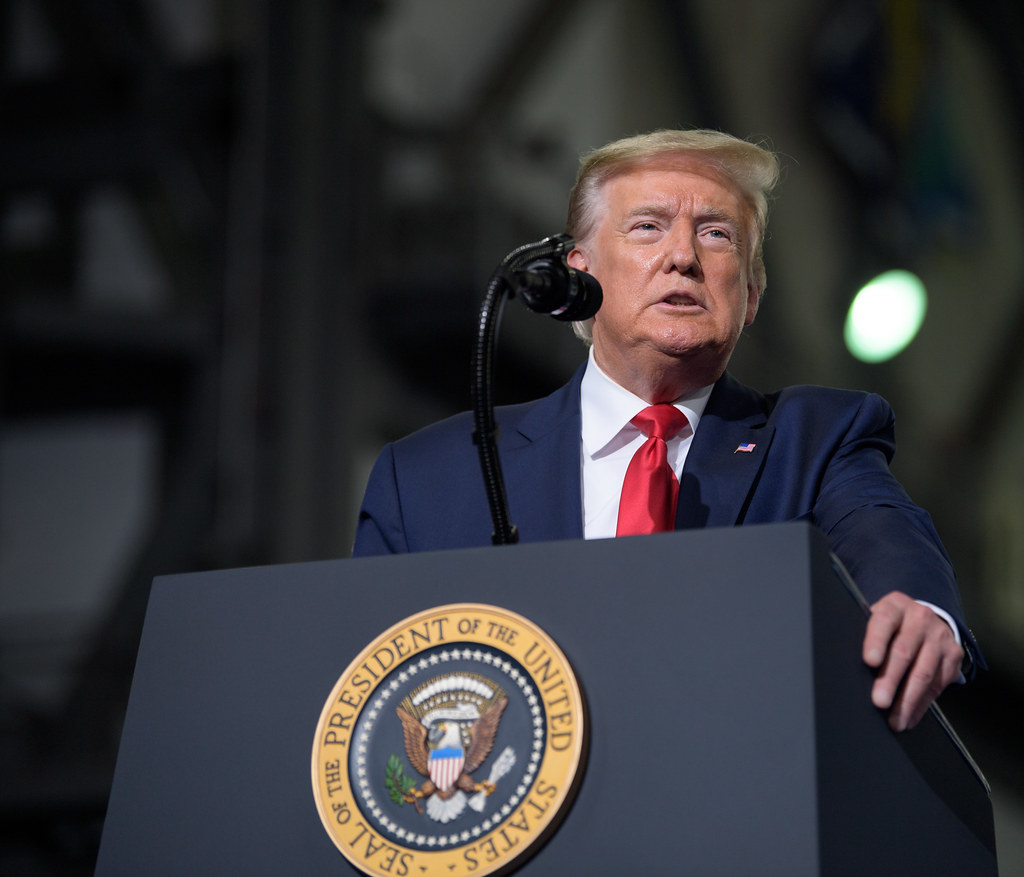
The 2024-25 school year at Central has been unique in many ways so far, but the chief event characterizing this fall was the 2024 Presidential Election. The pressure of the election was felt by a multitude of students, many staying up late past their usual bedtimes, glued to the live election maps, watching with bated breath as states lost their gray quality and slipped into the blue or red sides of the political tug-of-war.
As Kamala Harris and Donald Trump faced off in an unusually youth-oriented election, Central students found politics seeping into everyday conversations. In one way or another, students are hearing about or talking about the election, despite only a minority of the student population actually being old enough to vote in this election. Throughout the course of the election and in the wake of the Presidential seat going red, what were Central students saying and thinking?
With Pennsylvania being a battleground swing state, students at Central often have an astute awareness of the value of the votes being cast around them. Leo Fiore (284), felt that Philadelphia’s role “made the election feel a bit more real, since on multiple occasions candidates showed up for campaign events.” This experience is shared by many students and residents of the city, especially because of Philadelphia’s prominence as a widely democratic city in the swing state of Pennsylvania. Kala Ramji-Nogales (285) stated, “Because Philly is a liberal bubble, there was a lot of support for Harris, but even within Philly, it was clear to me that national support for her wasn’t wholly where it needed to be.” In addition to the feeling of doubt in the country’s support for Harris, Kala also felt frustration in the lack of action involved in her role as a high school student. Specifically, she wished that there were more things for her to do on Election Day to help the cause, and for the voting age to be lower in order to represent those with stakes in the election outcome, a feeling shared by many others of her age group.
Central’s placement in Philadelphia also gives its students added insight into the campaigning process of presidential candidates, as the Harris campaign spent a significant amount of time and effort in the city. Specifically, the Harris rally hosted the night before Election Day, which drew several Central students away from Homecoming at the Loews Hotel to the Philadelphia Museum of Art’s steps in order to participate. Two students, Mari Menkin-Schmitt (285) and Nadia Salamon (285), attended the Harris rally before arriving to homecoming. In Mari’s experience, the rally was “such a powerful place to be the night before the election.” Although it seemed to her that the youth wasn’t the main demographic for the rally, it was without a doubt a notable topic of discussion for high schoolers at the time.
When Election Day itself reared its nerve-wracking head, it brought with it a wave of anxiety and excitement for many involved Central students. The complicated duality of being a citizen of a blue city within a swing state was especially felt by Faye Gustafson (286), who “felt hopeful that the Democratic candidate would win” in Philadelphia, but “less confident knowing that we could go either way” for Pennsylvania as a whole. These sentiments were shared by many students, which overall contributed to the high emotions at school the day after the election results were finalized by Associated Press. Faye remarked that she “felt a pretty significant shift in the school environment following the day of the election” and “noticed a lot of people talking about their concerns for the good of the country.” Similarly, Leo Fiore (284) noticed a general upset, likening the general feeling to “an atmosphere of grief, like a family pet had died.” The feeling of unification and familiarity amongst peers was felt in many ways in the wake of the election results. In every corner of the school, students were brought together under feelings of stress, grief, and general upset. Contrastingly, there were significant ways that the election divided students of differing political beliefs, primarily in the variety of reactions post-Election Day. Kala Ramji-Nogales (285) remarked that “few were happy, and those who were [happy] were generally denounced [on social media and in person].” Political discourse within a high school, especially one positioned as uniquely as Central, can act as both a unifying and dividing factor, which well reflects the nature of the bipartisan system’s effects on America’s social state as a whole. However, as Kala also said, “as long as we keep fighting for justice, there is still hope,” an important sentiment in troubling times of political turbulence like this one.


 Centralizer